



There are a lot of different industries that have made. In order to produce useful insights, AI technologies, such as machine learning algorithms, examine enormous datasets from consumer interactions. This has (and will continue to) transform how companies interact with their clients by boosting competition and producing individualized experiences.
Incorporating AI into eCommerce not only gives customers personalized experiences, but it also gives businesses cutting-edge capabilities for analyzing performance indicators in real time. The market for artificial intelligence in eCommerce is estimated to be worth $8.65 billion in 2025 and is projected to expand at a compound annual growth rate of 14.60% from 2024 to 2032, reaching $22.60 billion. The Symbiotic Symbiotic Symbiotic Symbiotic Symbiotic Symbiotic Symbiotic Symbiotic Evolution is a dynamic ecosystem.
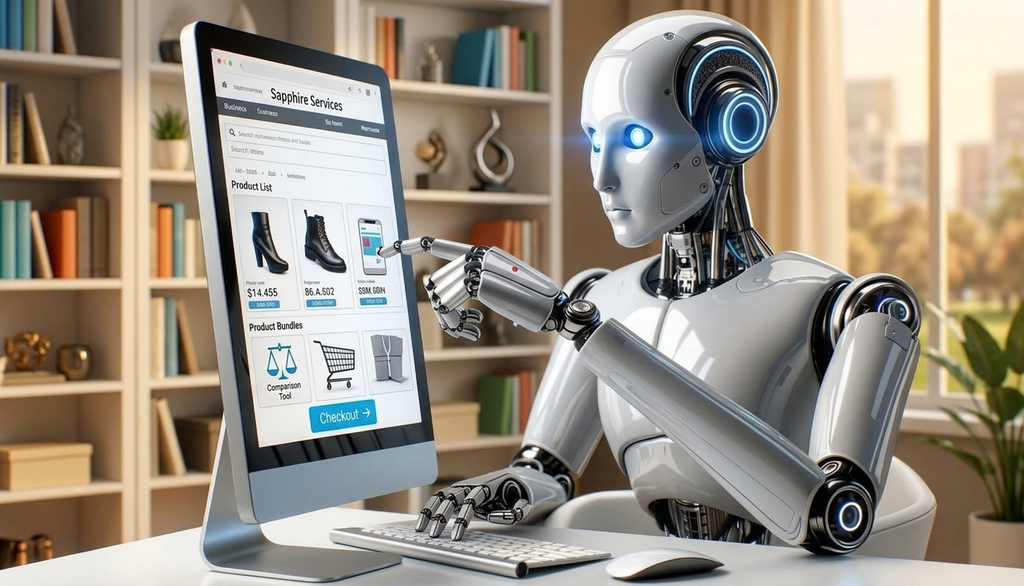
How eCommerce Will Be Disrupted by Artificial Intelligence
- AI’s quick and precise data processing is transforming eCommerce.
- With its real-time recommendations, personalization is one important area where AI is having a big impact.
- Product categorization and inventory management are examples of operational duties that machine learning automates.
- The user search experience is being improved by voice-activated assistants and AI-powered image identification.
- By using past data, sophisticated computers are enhancing demand forecasts.
- Offering Chatbots Chatbots Chatbots Chatbots Chatbots Chatbots Chatbots.
Four Advantages of AI in eCommerce
A rise in client satisfaction and engagement
AI keeps content, invested, invested, eCommerce, eCommerce, eCommerce, eCommerce, eCommerce, eCommerce, eCommerce, eCommerce. Personalization is the distinguishing feature; AI algorithms can determine user preferences and present products tailored to each person’s tastes based on their previous purchases or browsing history. Because customers feel specifically attended to, this focused strategy maximizes customer involvement and raises satisfaction levels.
Improved Customer Experience
It is crucial that online businesses aim for outstanding customer service, which eventually converts into brand loyalty – and that’s where AI for eCommerce becomes essential. Businesses may respond to inquiries from prospective clients around-the-clock, without interruption, thanks to technologies like chatbots and virtual assistants. They improve the overall customer customer customer customer customer customer customer customer customer customer experience. Up to 80% of client interactions can be handled by AI systems, thereby lowering operating expenses.
Automating Routine Tasks
Particularly in eCommerce, time is money. Fortunately, common jobs (such managing inventory or responding to regular customer requests) may be automated with the use of AI, saving a significant amount of time. Smart systems like Glimstech AI may prioritize tickets based on urgency (or other criteria), automatically react to routine inquiries, and automatically evaluate the sentiment represented in customer messages to identify their emotional state.
More Accurate Forecasting and Analytics
AI in eCommerce offers insights for critical decision-making through predictive analytics, in addition to improving customer service. More precise demand forecasting is made possible by intelligent systems’ ability to sort through enormous data sets and examine patterns, trends, and consumer behavior. Online businesses can avoid potential sales losses from out-of-stock situations and improve stock levels with the use of such sophisticated analytical tools.
Challenges of Using AI in Ecommerce
Dependency on Data Volume and Quality
Possibly one of the most noteworthy is one of the most noteworthy. Artificial intelligence technologies for e-commerce cannot operate at their best or provide precise insights without it. For machine learning algorithms to get better over time by finding patterns and learning from them, large amounts of data are essential. The problem of data quality comes next. Unreliable outcomes are the product of poor quality or inconsistent data, which is undesirable in a dynamic industry like eCommerce where every action affects your bottom line.
High Cost of Initial Investment
Another cost revolves about around around around around around around. Adopting AI in business is not inexpensive; it involves significant time and human resource commitments in addition to a large financial investment. This element can be problematic, particularly for small organizations that are just getting started and do not yet have the funds to meet all of the requirements for integrating AI.
Technical Proficiency Requirements
Implementing AI usually calls for advanced technical expertise. Using an AI in eCommerce may require hiring professional developers or possibly collaborating with specialized tech companies that have experience navigating such a technological terrain, depending on the intricacy.
Privacy Issues Associated with AI Use
Lastly, there’s a fine line between employing eCommerce artificial intelligence to provide customized buying experiences and violating client privacy. This issue is more important than ever because of growing European rules and regulations like GDPR, which are intended to safeguard consumers’ online privacy rights.
The Greatest AI Tools for eCommerce
- Klevu
- Shopify Magic
- Lyro Ai Chatbot
- Nosto
- Octane Ai
- Vue.ai

Comments are closed