



AI has just changed. AI is already being used by several retail organizations to impact everything from stock management to staffing decisions. AI may assist boost traffic, enhance basket sizes, and guaranty a uniform experience throughout your network, regardless of whether you’re running hundreds of locations or introducing a new store concept.
While AI in retail is increasing, the recent McKinsey State of AI 2025 research reveals a crucial and often neglected concern. Almost one-third of organizations report problems caused by inaccurate model outputs, making AI inaccuracy the most frequent adverse effect of AI implementation. According to the study, 84% of businesses currently employ AI, but the majority are still in the pilot or experimentation stages, which means that their models are frequently trained on inconsistent, incomplete, or non-representative information. When this happens, AI doesn’t just emit noise, it may actively mislead decisions, misdiagnose store issues, and misallocate investment across operations, CX, staffing, and strategy.
AI’s effects on the retail sector
The impact of retail has been enormous. AI currently affects 53% of U.S. purchasing decisions, changing everything from digital advertising to product discovery, according to Gary Drenik’s recent Forbes article, “How AI’s $243.7 billion boom is reshaping retail and beyond.” Retail has become the epicenter of this technological transformation as companies engage in AI to satisfy growing consumer demands regarding convenience, ethics, and personalization.
AI is changing important fields like:
- Improving the supply systems via real-tracking the supply chain via real-tracking the supply chain via real-tracking the supply chain via real-tracking the supply chain.
- Using targeted content, customized promotions, and dynamic website experiences to increase customisation
- Using chatbots, AI-generated support tools, and omnichannel communication to enhance customer engagement
- Enhancing operational forecasts, including personnel and stock planning based on predictive analytics
AI’s advantages in retail
Improved inventory control
- Make more precise demand forecasts.
- Make real-time order adjustments to cut down on waste.
- Manage replenishment dynamically to prevent stockouts.
Increased conversion and basket size
- To recommend relevant products, use recommendation engines.
- Utilize consumer information to tailor promotions.
Quicker resolution of issues
- Sentiment Sentiment Sentiment Pain is sentiments are sentiments.
- Quick support triage is made possible by natural language processing.
Challenges of AI in retail
Complexity of integration
- It frequently requires a lot of resources to connect AI tools to legacy systems.
- Data pipelines must be configured for real-time pipelines must be configured for real-time pipelines must be set up.
Limitations of data
- Model accuracy may be compromised by low-quality data.
- Forecasting and customization gaps may result from missing inputs.
Cultural opposition
- AI advice might not be trusted by store teams.
- AI tools may be misinterpreted or disregarded in the absence of training.
AI in retail examples
Amazon’s innovative cashierless stores
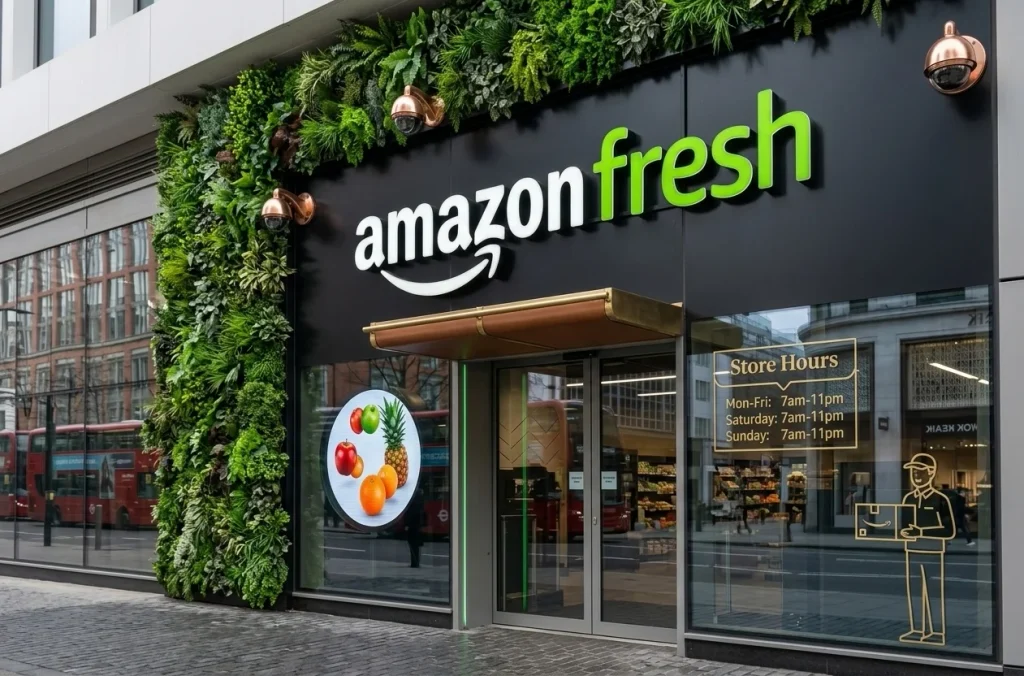
One of the most well-known uses of AI in physical retail is Amazon’s Just Walk Out technology. Customers may enter, pick up things, and exit these establishments without using a traditional checkout thanks to computer vision, sensor fusion, and deep learning. AI eliminates the need for checkout queues by tracking each customer’s choices and automatically charging their account. This invention simplifies the purchasing process and provides an example of how AI can eliminate obstacles and provide a smooth, technologically advanced experience.
AI in retail stores
AI is quickly emerging as a key instrument for enhancing customer satisfaction, performance, and consistency in retail establishments. Retailers now have unprecedented visibility and agility thanks to their capacity to monitor, evaluate, and react to real-time data within stores.
AI-driven solutions enable for the analysis of foot traffic patterns, client mobility, and dwell time at certain displays. Retailers may improve engagement and conversion by redesigning layouts with the aid of these information. AI can identify possible problems with signage, pricing, or product availability, for instance, by detecting when customers regularly halt in front of specific products but do not make a purchase.

Comments are closed